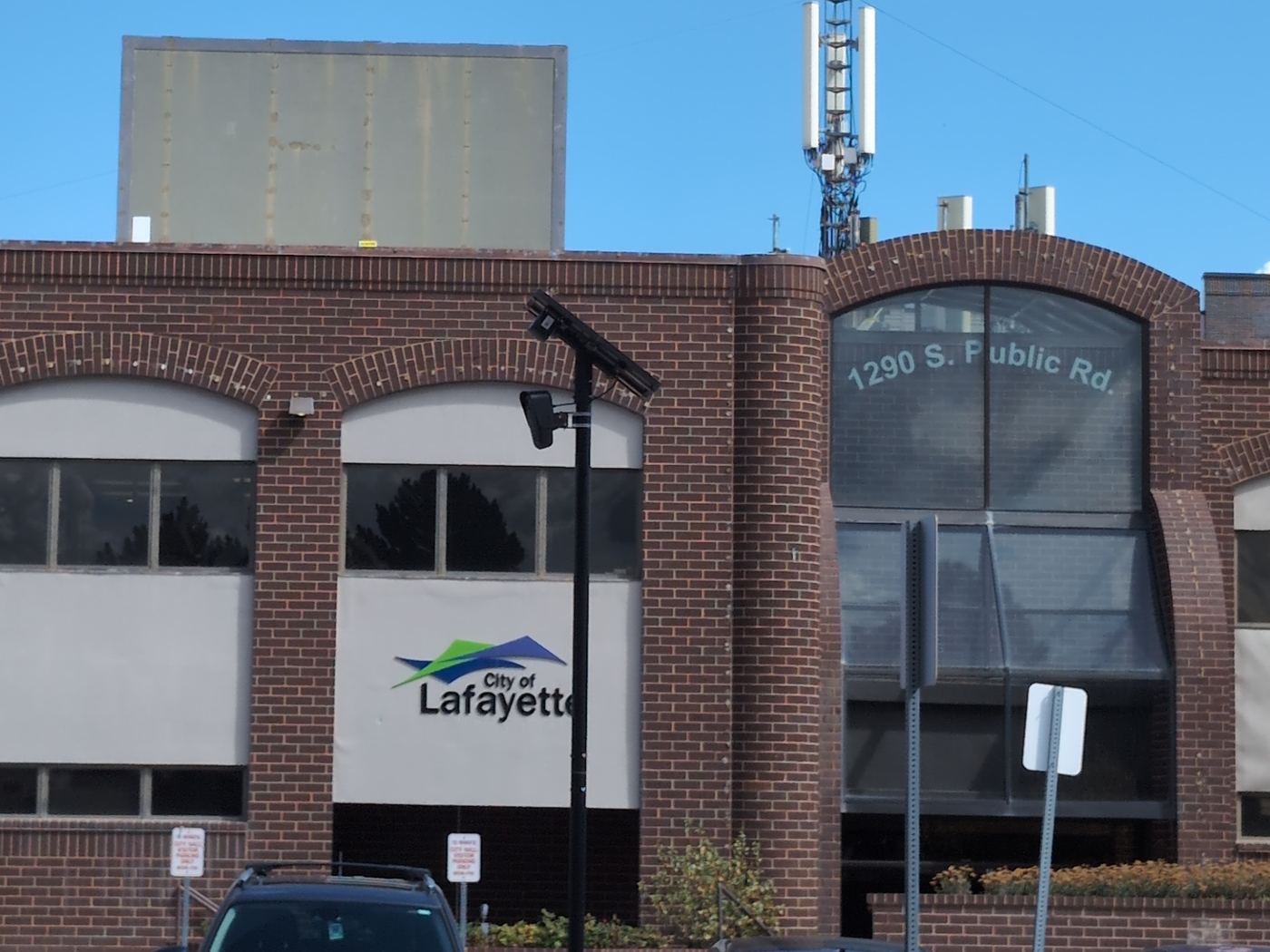
City Council voted to remove Flock funding from the 2027 budget, 5–1.
It still needs a second vote on October 20. After that,
we have to make sure the cameras come down and don't come back.
A Flock camera outside Lafayette City Hall, 1290 S. Public Rd. Photographed September 18, 2026.
October
20
Tuesday
One more vote, 5:30 PM
City Hall, 1290 S. Public Rd. Council takes the second vote on Ordinance 18B,
the spending plan with no money for Flock.
Come out so they know we're still paying attention!
The city manager will also bring options for winding Flock down.
The vote stops the money. It doesn’t yet say when the cameras come down or what happens to the data already collected. Council asked for a clear exit plan before October 20.
✓
2027 budget with no Flock fundingResolution 2026-24B, passed October 6, 5–1.
Second vote on the spending ordinanceOrdinance 18B, second reading October 20. Passed first reading 6–0.
City tells Flock the contract is endingThe contract ends when this year’s money runs out (§11.16). When exactly is one of the open questions.
All 30 city cameras removedFlock removes its hardware at its own expense (§7.2).
Data deleted, outside access cut offUntil the cameras are off, other agencies can still search Lafayette’s data.
A rule so it can’t come back quietlyAn ordinance requiring a public hearing and a recorded council vote before the city buys any surveillance technology.
Thank you to Mayor Pro Tem Tim Barnes and Councilors Kyle Beaulieu, David Fridland, Adam Gianola, and Annmarie Jensen, who voted for the budget without Flock, and to everyone who showed up: about 30 residents spoke and 74 wrote in. Not one asked to keep Flock.
“I’ve never seen such a big turnout for anything that I have ever worked on.”
“That is the largest community engagement I’ve seen in my 17-year career.”
What’s still running until the cameras come down
Every number here comes from the City of Lafayette, its police department’s public Flock portal, or documents released under the Colorado Open Records Act.
30
cameras on Lafayette streets. Each one photographs every passing vehicle, and the data is kept for 30 days.
Flock transparency portal, Sept. 2026
448,750
different vehicles recorded in 30 days, in a city of about 30,000 people. Most belong to people just passing through.
Flock transparency portal, Sept. 2026
140,000
searches of Lafayette’s camera data in three months, most of them by outside agencies.
Search logs, Jan.–Mar. 2026, via records request
How a budget vote ends a contract
Council approved the five-year contract in January 2024 as one line on the consent agenda, with no separate discussion. It runs through early 2029, but Colorado law doesn’t let a city commit future budgets without a vote of the people. So the agreement says it ends, with no penalty, in any year council doesn’t fund it. Flock then removes its cameras at its own expense. That made the 2027 budget the real decision. After residents spoke up in September, city staff prepared two versions of the budget, one with Flock and one without. On October 6 council chose Resolution 2026-24B, the one without. The difference is $77,500.
“Any failure of Customer’s governing body to annually appropriate adequate monies… shall terminate this Agreement… and such termination shall be without penalty or other cost to Customer.”
How did we do it?
The most important piece is to get enough people to show up at council meetings
and write in comments. Lafayette is a small city, so a few dozen people can make
a big difference. Here are some other concrete things we did.
Find the exit clauseMany government contracts end without penalty in any year the city doesn’t fund them. That turns the yearly budget into the decision point.
Get your city’s own numbersYour police department’s Flock transparency portal, the contract, and the search logs through an open-records request.
Find out how it was approvedMeeting minutes and video often show it passed with little or no discussion.
Ask for one specific vote“Pass the budget without the $77,500” is easier to say yes to than “end surveillance.”
Time it to the budget calendarStart in late summer, when the next year’s budget is still being written.
Pack the roomWe got the word out on Reddit, Facebook, and at the farmers market. We also
found people that have spoken out before in council meeting minutes.
Can’t come? Comments sent by 1 PM on meeting day go into the packet council reads. Ask council to pass Ordinance 18B on second reading, and to set a date for removing the cameras and deleting the data. Three sentences is plenty.
A few emails a month: meeting dates, what happened, and what’s next. Enter your email, then click the link in the confirmation we send. Your address is never shared.